Continuous democracy: what happens after the report?Copie de MoContinuous democracy: what happens after the report?del

Democratic innovation

At the end of a citizens’ assembly, there is usually a final report. It holds the work of people who have spent days, sometimes several weekends, listening to evidence, changing their minds, and finding words they can agree on. Then they hand it over. For the people going home, a more ordinary question remains. Who will read it, and when will they hear back?
That question runs through a report on citizen participation that Erwan Balanant, an MP for Finistère, submitted to the French government on 4 November 2026. Prime Minister Sébastien Lecornu and Laurent Panifous, the minister responsible for relations with Parliament, asked Balanant to take stock of citizen participation in France and explore how citizens could have a regular say between elections. As part of the mission, Jonathan Moskovic, founder of What about Dem, and Magali Plovie, former president of the French-speaking Brussels Parliament, were interviewed together about the recent wave of deliberative initiatives in Belgium, with a particular focus on Brussels’ deliberative committees. The report’s account of those committees speaks to our work on how public institutions can involve citizens in decisions and show them what becomes of their recommendations.
A regular place between elections
Erwan Balanant calls his proposal “démocratie continue”, or continuous democracy. The idea is to give people a regular place in the work of representative institutions between elections. Sometimes that means helping to decide what deserves a place on the agenda. Sometimes it means weighing in while a bill is taking shape, or coming back years later to ask how a policy has worked for the people it was meant to serve.
For participation to become a regular part of public life, people also need to be able to fit it into their own lives. A Saturday in a meeting room can mean a shift without pay or an extra day of childcare. The report proposes covering costs such as travel and childcare and compensating participants for lost income in national processes. These arrangements help determine who can afford to say yes when the invitation comes.
Saying what is on the table, then reporting back
One of the report’s most practical proposals begins before anyone takes a seat. The institution inviting people to participate would publish a short document setting out what is open for discussion, what constraints apply and how the recommendations will reach the people who make the decision. Afterwards, the decision-maker would explain how it dealt with each recommendation. A participant could return to the original document and see whether the institution had kept its word.
The Brussels example
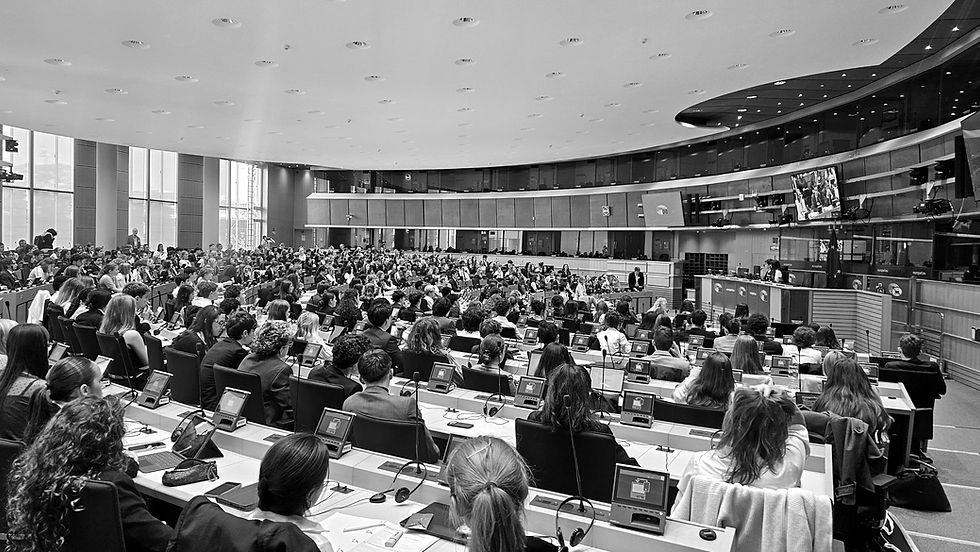
Brussels offers a glimpse of how that relationship can work inside a parliament. A proposal backed by a thousand signatures can put a subject forward for deliberation. Parliamentarians can propose one too. In the deliberative committees of the French-speaking Brussels Parliament, residents selected by lot make up three quarters of the membership. Elected representatives make up the rest. They hear from experts and other contributors, then work together on recommendations. When it comes time to vote, residents do so by secret ballot and parliamentarians vote publicly. If an absolute majority of parliamentarians votes against the position taken by a majority of residents, the parliamentarians must explain why. Where the votes agree, Parliament commits to following up.
Within the ordinary business of government
In France, much of this work could happen through the ordinary business of the government. Under one proposal, the impact assessment accompanying each government bill would explain whether citizens were consulted and why. If there was a consultation, it would record what came out of it and what the government did in response. That would give MPs a record of the consultation as they begin to examine the bill.
The report also asks what happens further down the line. It proposes trying out ways for citizens to contribute to Parliament’s evaluation of public policies, for example through a panel or by giving evidence to a committee. Think of a law intended to make a public service easier to access. Figures might show how many people used it. The people who tried can tell a committee where they got stuck, what finally helped and what still needs to change.
What progress could look like
The next step for France is to decide which of these proposals to put into practice. Some of the most telling signs of progress may be easy to miss. A committee returns to a policy and asks the people affected what happened on the ground. A bill is published, and the public can follow what became of the consultation. And someone who spent several Saturdays working through a difficult question can find out what happened to the report they helped write.