The Esch Citizens’ Assembly – A First in Luxembourg

Design

What do the residents of Esch want for the future of their city?
This is the central question of the Esch-sur-Alzette Citizens’ Assembly, a first-of-its-kind project at the municipal level in Luxembourg. Faced with declining trust in institutions and a growing sense of alienation from decision-making, this project offers a different approach: listening seriously to residents and giving them the tools and legitimacy to influence decisions affecting their city.
In Esch, a multicultural city, residents’ voices are diverse but often missing from major debates on urban planning, community life, or local governance. The Citizens’ Assembly aims to change this.
A first in a country that had never seen such an initiative at the local level
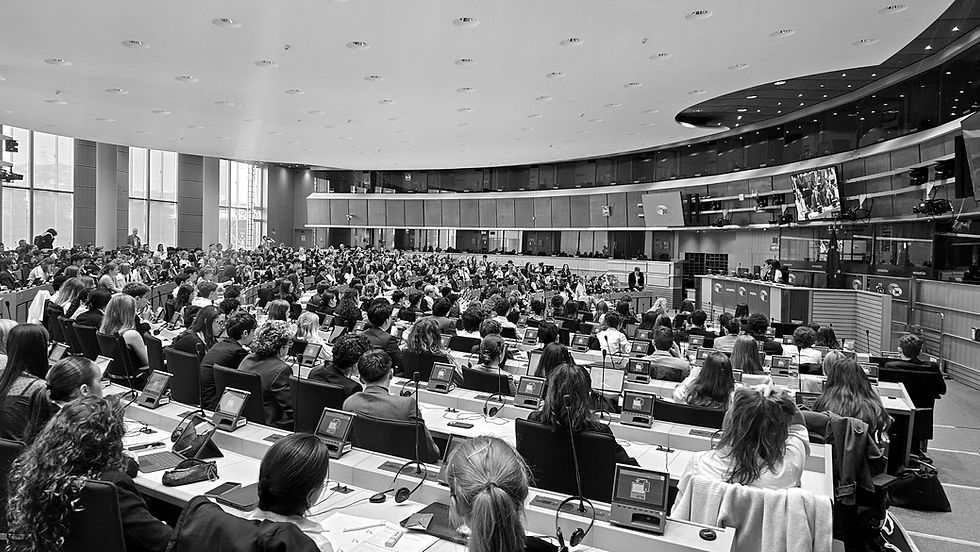
The assembly brings together 40 randomly selected citizens The selection was designed to reflect the diversity of Esch, including people of different ages (16 to 65+), nationalities, neighborhoods, and educational backgrounds.
This is the first municipal citizens’ assembly in Luxembourg. It serves as a concrete testing ground and demonstrates that ambitious participatory democracy processes are possible here and now.
The process will take place over six sessions, from March to June 2026. The central question is: How can Esch’s public space be transformed to strengthen community life, while addressing the challenges of urban planning, social cohesion, sustainability, and citizen governance?
A Memorable Kickoff
The first session, the kickoff meeting, was held in the legislative chamber of Esch’s Rathaus. Mayor, Christian Weis, opened the proceedings with a clear promise: all proposals emerging from the assembly would receive a political response. About twenty minutes later, he left the room so as “not to influence the process and to make way for the citizens.”
James Macdonald-Nelson, Cities Programme Lead at DemocracyNext, who was present at the session, highlights an interesting, even symbolic moment. About ten members of the assembly were waiting outside City Hall, hesitating to enter. One explanation is that they did not know they could walk in on their own, highlighting a lack of understanding about what is and is not possible. This moment speaks volumes about what this type of process disrupts – and what it makes possible.
The second session, on Saturday, March 21, focused on urban planning. Assembly members took to the streets of Esch in small groups to observe, take notes, and sketch their city with a critical eye. In the afternoon, they shared their impressions in small multilingual groups, followed by a collective presentation in the plenary session. This was a concrete step forward, right from the start.
In addition, a notable innovation was integrated: Dembrane. Specifically, each small group had a phone that recorded and synthesized the discussions in all the languages spoken around the table. Assembly members could interact with this summary, validating or refining it.
What about dem: partner from conception to implementation
What about dem supported this project well before its launch, actively participating in its design and implementation alongside a team of specialized partners, including DemocracyNext, the city of Esch-sur-Alzette, and the University of Luxembourg.
Session facilitation was provided by Snakke & Co., who created the conditions for an inclusive and structured workspace. It was Hannah Vanbelle from What About Dem who trained them in facilitation, laying the methodological foundations for the entire process. Also involved were Cultures of Assembly, Markus Miessen, César Reyes Nájera, and Gustav Kjær Vad Nielsen, who worked with the municipality on issues of citizen participation and urban imagination, as well as others who made the realization of this project possible.
Around June 25
The assembly will continue its work through June. The final recommendations will be submitted to the municipality on June 25. The College of Mayor and Aldermen has committed to responding formally. This project is designed as a pilot to demonstrate that this type of citizen participation can work in Esch and pave the way for future assemblies.
What about dem is proud to have contributed to this project. The goal is to build a more inclusive local democracy, session by session, citizen by citizen.