Brussels chooses democracy. Wallonia undermines it.

Op-ed

A tight budget, and two neighboring regions with radically opposing visions of democracy. One enshrines citizens’ assemblies and their regulations in law, ensuring they continue even as the political majority changes. The other removes their legal safeguards. This is more than a technical decision; this signals a tragic political direction.
A subtle, yet real, step backward
On March 10, the Walloon Parliament’s Energy Committee met to discuss amendments to the “carbon neutrality” decree adopted in 2023. These new provisions remove the legal framework for the citizen panel on climate policies. The safeguards, promoted by the OECD as an international standard, are disappearing: random selection, a standard of representativeness, the requirement to make citizens' opinions public, and political oversight. Instead, the text refers to 'general principles', the details of which could now be defined by government decree.
Thus, we are moving from a guaranteed democratic right to a consultation where the government sets the rules.
We are thus moving from a guaranteed democratic right to a consultation where the government sets the rules.
The false argument of ‘cost’
To justify this backward step, the minister cited the cost of the previous citizens’ panel: approximately 600,000 euros, with more than 40,000 euros allocated for hotel stays and various expenses. This figure is disputed by the opposition. Ecolo (the Greens) instead refers to a budget closer to 150,000 euros, and is requesting the Walloon Air and Climate Agency to provide details. Beyond this dispute over figures, the argument reveals a fundamental misunderstanding of the purpose of citizens’ assemblies.
In all serious deliberative processes, expenses (allowances, lodging, meals, etc.) are not privileges. They are a prerequisite for representativeness. Without them, participation is dominated by those who already have the time, resources, and expertise to get involved.
What some describe as an unnecessary expense is, in reality, the cost of democratic inclusion.
The opposite choice of Brussels
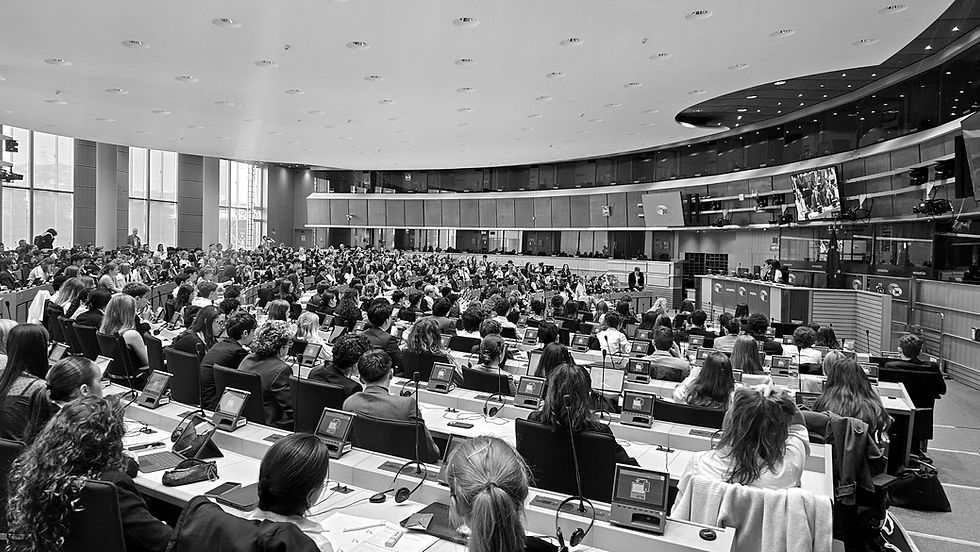
The contrast with Brussels is striking. Faced with a structural deficit exceeding one billion euros, the Brussels government recently chose to enshrine in law a permanent citizens’ assembly on climate. Institutionalized, funded, and integrated into the process of regional climate policy.
In other words, despite real budgetary constraints, Brussels considered citizen participation not as an optional extra, but as a democratic investment. The same reasoning applies to the deliberative committees that have also been made permanent within the Brussels Parliaments. The issue is therefore not financial, but political.
Improving is not giving up
Let us be clear: no one claims that the 2023 Walloon citizens’ panel was perfect. Held in a context still marked by the pandemic, it suffered from certain limitations: methodological shortcomings, imperfect coordination with parliamentary work, and insufficient follow-up on recommendations. However, the participants themselves formulated proposals to improve this mechanism: continuity, better links with institutions, and better structure for political follow-up.
This is precisely what democracy is: a process that corrects and improves itself. Discarding the statutory guarantees because the mechanism needs development, confuses improvement and abandonment.
A Choice for Society
Democracies almost never disappear abruptly. They are often eroded by a series of decisions presented as technical, pragmatic, or budgetary.
I had the opportunity to work for nearly fifteen years on these democratic mechanisms, particularly in Brussels and on the international stage. There, I saw citizens who had never been interested in politics become, in just a few weekends, engaged participants in public debate. I saw elected officials change their minds in light of these discussions. Above all, I saw something that has become rare: the rebuilding of trust and citizens rediscovering an enthusiasm for politics - and vice versa.
Wallonia still has another option. There are ways to improve the system, such as achieving economies of scale through institutionalization, and better integration with parliamentary work. There are indications of openness. MR (the Liberal party, the same party giving up on the legal safeguard) MP Charles Gardier has again advocated for the use of public consultations (non-binding referenda) in Wallonia. This mechanism was promoted during the first Walloon deliberative committee, which should be involved in the monitoring of this process, according to participants. The Liberal MP is therefore calling for citizens to be allowed to directly express themselves on certain public decisions. This proposal shows that the debate is not over, even within the MR, a party that has historically been somewhat closed-minded on these issues. Above all, it highlights one essential point: citizen participation must not be curtailed, but reimagined and strengthened.
Ultimately, the issue is not budgetary, but political. It is, in fact, quite simple: what role do we truly want to give citizens in our democracy?